

Fever in Adults: When to See a Doctor, and When to Wait
The thermometer reading is not what decides. What matters is your general condition and the symptoms that come with the fever.
Published
Last medically reviewed
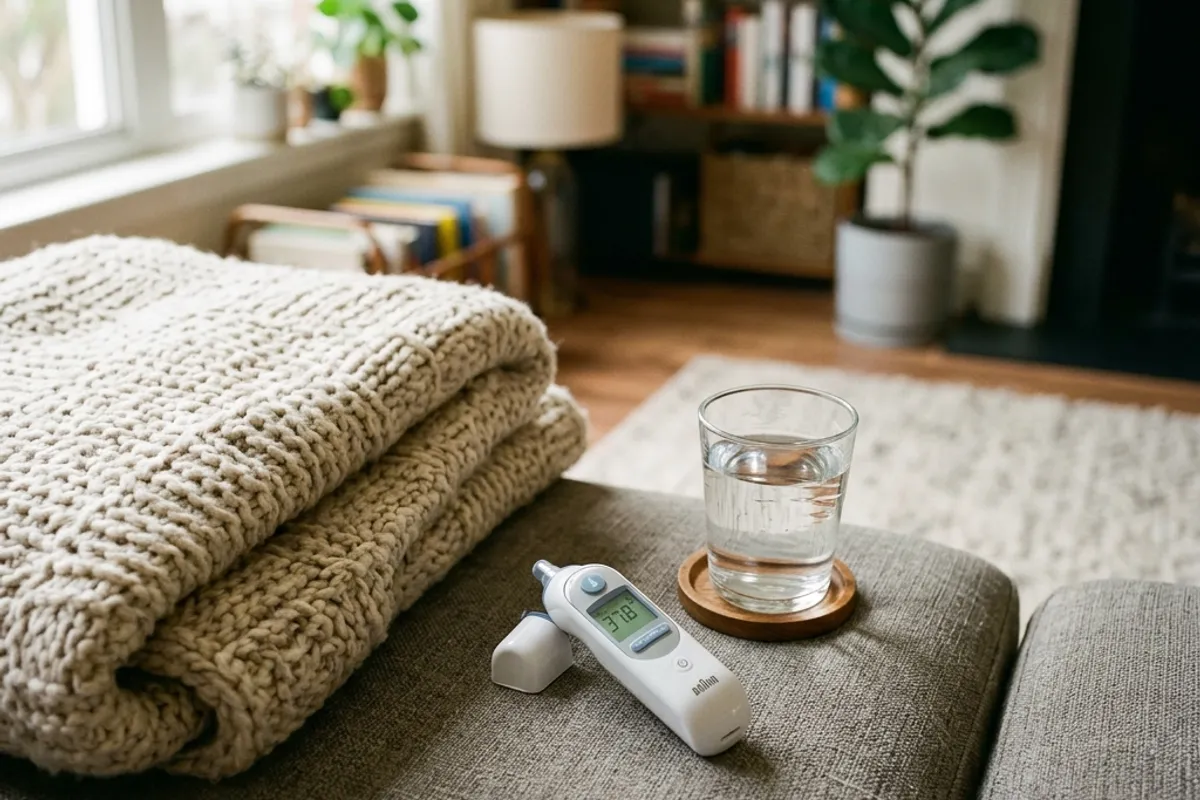
In an otherwise healthy adult, an isolated fever lasting under 48 hours does not call for urgent care: most often it reflects a viral infection that will settle on its own. What should prompt a consultation is not the number on the thermometer but what comes with it — neck stiffness, breathing difficulty, confusion, a rash that does not fade under pressure, intense localised pain — or a fever still going after three days.
What counts as a fever?
The usual threshold is 38 °C. Above 39 °C it is called a high fever, but in adults the height of the fever is a poor guide to severity: ordinary flu can reach 40 °C while a serious infection sits at 38 °C. General condition and accompanying signs are what matter.
Which signs mean calling the emergency services?
Call 15 without delay if the fever comes with:
- a stiff neck with severe headache and discomfort in bright light;
- a rash that does not fade when pressed with a clear glass;
- confusion, unusual drowsiness, or difficulty rousing the person;
- difficulty breathing, very rapid breathing, or blue lips;
- chest pain;
- cold, mottled hands and feet with a very fast pulse.
If you see a red flag, call emergency services. For everything else — worrying but not life-threatening — a doctor can come and examine you in Tangier. 06 64 54 84 12
When should you be seen the same day?
- Fever lasting more than 3 days without improvement.
- Fever returning after a period of improvement.
- Clear localised pain: ear, throat, sinuses, burning urine, calf pain, one-sided lower back pain.
- Unable to drink enough; passing little, dark urine.
- Older adults, pregnancy, chronic illness, immunosuppressive treatment, or recent return from a malaria-risk area.
What to do at home in the meantime
- Drink regularly. Fever costs you fluid; aim to pass pale urine several times a day.
- Uncover. No heavy blankets, keep the room temperate.
- Paracetamol if the fever is uncomfortable. Follow the dosing on the packet and the interval between doses, and never combine two products containing paracetamol. The aim is comfort, not chasing the number down.
- Be careful with ibuprofen. Avoid it without medical advice, particularly with dehydration, kidney problems, ulcers, pregnancy, or a suspected skin infection.
- No cold baths or ice packs. Abrupt cooling triggers shivering and is uncomfortable; a cool cloth on the forehead is enough.
- No leftover antibiotics. Most fevers are viral, and antibiotics taken unnecessarily cause side effects and drive resistance.
What the doctor is looking for
A fever with no obvious source means a methodical examination: throat, eardrums, chest, abdomen, skin and urine, plus blood pressure and breathing rate. The goal is twofold — find a cause that can be treated, and pick up the signs that require hospital care. Most of that can be done at your bedside; blood tests or imaging, however, will need a laboratory or a hospital.
Travel to care, or have care come to you?
Sitting in an emergency department at 39 °C with body aches often means hours of waiting among other infectious patients, for a diagnosis that could have been made in bed. In Tangier, having a doctor come out makes sense when your general condition is preserved but the fever is worrying, persistent, or affecting someone frail. The moment a red flag appears, the logic reverses: that is a call to the emergency services.
Frequently asked questions
Does a cold bath bring a fever down?
No, and it is not advised: sudden cooling triggers shivering, which produces more heat, and it is deeply uncomfortable. A cool cloth on the forehead or neck is enough.
Do you always need to bring a fever down?
No. Fever is a normal response to infection. You treat it for comfort, not to hit a number. If you feel reasonably well at 38.8 °C, there is nothing to do beyond drinking.
How long should you wait before seeing someone?
With no red flags and a good general condition, 48 to 72 hours is reasonable. With a red flag, do not wait at all.
Does fever justify antibiotics?
Rarely. Most adult fevers are viral, and antibiotics do nothing for them. They only help once a bacterial infection has been identified on examination.
Medical references
- High temperature (fever) in adults — NHS (Royaume-Uni)
- Meningitis — symptoms — NHS (Royaume-Uni)
- Urinary tract infections (UTIs) — NHS (Royaume-Uni)
Not sure how serious it is?
If you see a red flag, call emergency services. For everything else — worrying but not life-threatening — a doctor can come and examine you in Tangier.
More on this topic: emergencies and red flags · home doctor in Tangier · our medical team
Related articles

Flu Season in Tangier: Symptoms, Prevention & When to Call a Doctor
Flu season is hitting Morocco hard. Learn how to recognize symptoms, protect yourself, and when to call a home doctor in Tangier.

Home Doctor or Hospital Emergency Department: How to Choose
One simple test: hospital is required as soon as you need an investigation that cannot travel to you — or as soon as life is at risk.

Symptoms That Require an Immediate Home Medical Visit
Fever, food poisoning, acute pain... Don't take risks at night in Tangier. Here are 5 symptoms that require you to call an on-call doctor.