

Home Doctor or Hospital Emergency Department: How to Choose
One simple test: hospital is required as soon as you need an investigation that cannot travel to you — or as soon as life is at risk.
Published
Last medically reviewed

The right criterion is not how much it hurts or how convenient it is — it is equipment. If the situation could be life-threatening, or if it needs imaging, urgent blood work, a deep suture or continuous monitoring, you need a hospital. If a clinical examination is enough to decide — fever, ENT infection, gastroenteritis, urinary infection, back pain, renewing a prescription — a home visit does the same job without the journey or the waiting room.
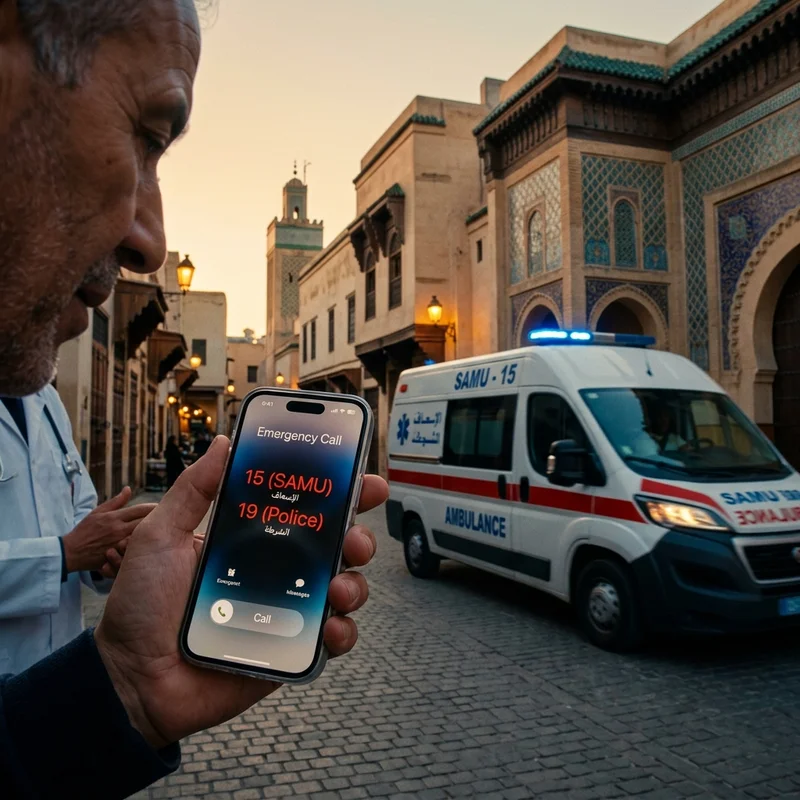
Call the emergency services (15) — do not wait for a doctor
- Chest pain, tightness, pain radiating to the arm or jaw.
- Sudden deficit: drooping face, arm falling away, slurred speech, loss of vision in one eye.
- Severe breathing difficulty, blue lips.
- Loss of consciousness, prolonged seizure, sudden confusion.
- Bleeding you cannot control, major trauma, extensive burns.
- Allergic reaction with swelling of the face or throat.
In these situations, waiting for a doctor to arrive delays care that is measured in minutes. It is the one case where the answer is absolute.
Go to a hospital emergency department
- Suspected fracture or severe sprain — an X-ray is needed.
- A deep or gaping wound, or one still bleeding after pressure — it needs stitches.
- Sudden severe abdominal pain, a rigid abdomen, no gas or stool passing.
- Vomiting blood, or significant fresh blood in the stool.
- Head injury with loss of consciousness, repeated vomiting or drowsiness.
- Severe dehydration, particularly in an infant or an older adult.
If your condition needs an examination and is not a life-threatening emergency, an Enurgence doctor can come to your home, hotel or residence. 06 64 54 84 12
A home visit usually covers it
- Fever in an adult or child whose general condition remains good.
- Tonsillitis, ear infection, sinusitis, bronchitis without respiratory distress.
- Gastroenteritis or food poisoning without red flags.
- Urinary infection, back pain, a known migraine, an arthritis flare.
- Superficial wound, sting, small burn.
- Renewing long-term medication after examination; a medical certificate.
- Older or immobile patients for whom the journey is itself a risk.
Where does teleconsultation fit?
It suits anything that can be settled without touching the patient: advice, a straightforward renewal, interpreting a result, pointing you in the right direction. It cannot listen to a chest, feel an abdomen, look at an eardrum or measure blood pressure — so it cannot resolve the cases where those are exactly what the doubt rests on. Unexplained fever or abdominal pain still needs a physical examination.
Three questions to ask yourself
- Is there a red flag? If yes: emergency services, now.
- Do you need an investigation that cannot be moved (X-ray, urgent blood test, stitches)? If yes: hospital.
- Otherwise, does travelling add anything? If not, a home visit saves time and avoids a waiting room full of infections.
What a home visit actually changes
The doctor sees the patient in their own setting: the medication genuinely being taken, the state of the home, whether anyone is there to help, whether a treatment plan is realistic. For an older person or a feverish child, that changes the quality of the decision. And when the conclusion is "this needs hospital", the patient arrives already examined and with a referral letter, which shortens the journey through the system.
Frequently asked questions
Can a home doctor put up a drip?
Intravenous rehydration is feasible at home for moderate dehydration, under supervision. Severe or unstable dehydration belongs in hospital.
Do you get a prescription after a home visit?
Yes. The prescription is written after the examination, exactly as in a clinic, and is valid at any pharmacy.
What if I genuinely cannot tell?
Describe the situation on the phone. A serious service will send you to the emergency department when that is what the situation calls for, rather than dispatching a doctor.
Does a home visit always avoid hospital?
No, and that is not its purpose. Part of its job is to establish that admission is needed, and to send the patient in with the right information.
Medical references
- Heart attack — symptoms — NHS (Royaume-Uni)
- Stroke — symptoms — NHS (Royaume-Uni)
- Meningitis — symptoms — NHS (Royaume-Uni)
- Anaphylaxis — NHS (Royaume-Uni)
Need a doctor at home in Tangier?
If your condition needs an examination and is not a life-threatening emergency, an Enurgence doctor can come to your home, hotel or residence.
More on this topic: home doctor · home doctor in Tangier · our medical team
Related articles

Symptoms That Require an Immediate Home Medical Visit
Fever, food poisoning, acute pain... Don't take risks at night in Tangier. Here are 5 symptoms that require you to call an on-call doctor.
Emergency Numbers in Tangier: Who to Call, and When
Three numbers cover almost every emergency in Morocco. Here is which one to dial, and how to tell the difference.

Night Doctor in Tangier – Home Consultation After Midnight
Falling ill in the middle of the night can be frightening. Learn how to call an on-call night doctor in Tangier.